
It can affect all three. Insurers usually need to be told, regulators often expect to be told, and a public body can treat a winding-up petition as grounds to exclude the company from new contracts and, after giving it a chance to respond, to terminate existing ones. Most of the damage follows advertisement, so the first week matters most. Directors also ask "do I have to tell my insurer about a winding-up petition?", "will we lose our council contract because of a winding-up petition?" and "can a winding-up petition affect our licence?". This page goes through each, and what to do before the petition is advertised.
Contracts, cover or a licence at risk? Free initial consultation with a Solicitor: call 07361 999123 or text DIRAID to 82228.
Your free call is with a Solicitor. Have the petition to hand if you can.
Text DIRAID to 82228and we will call you back
Or call us on 07361 999123
First consultation free · No obligation · Nothing to lose
Why the first week matters
Until the petition is advertised in The Gazette, few people outside the company know about it. It can be advertised no earlier than 7 business days after service. Once advertised it is public, credit agencies pick it up, and banks, insurers, public bodies and licensing authorities who monitor insolvency notices see it too; see does a winding-up petition affect the company's credit rating?
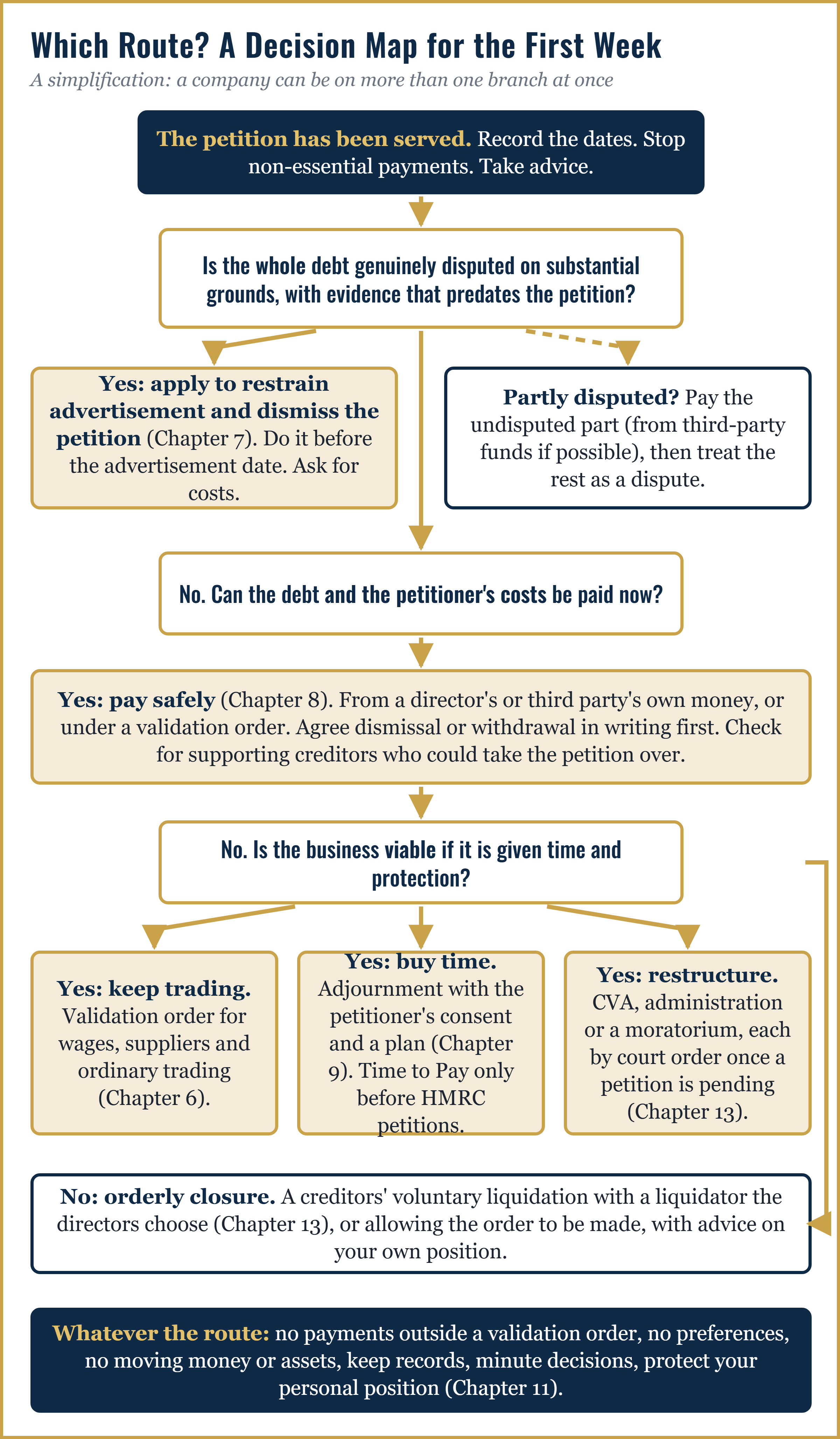
Paying, settling or disputing the petition before advertisement is therefore the single best protection for the company's cover, licences and contracts. See how to stop a winding-up petition and how to stop a winding-up petition being advertised.
Insurance
At placement and renewal. A business has a duty to make a fair presentation of the risk to its insurer before the policy is taken out, renewed or varied (Insurance Act 2015). A pending winding-up petition is very likely to be something an insurer would want to know. Leaving it out of a renewal can allow the insurer to avoid the policy or reduce a claim later, at the moment the company most needs the cover. Tell your broker.
During the policy. Many commercial policies have conditions requiring the company to tell the insurer about material changes, or allowing cancellation on notice. Some contain clauses about insolvency. Read the policy conditions, not only the schedule.
Premiums. Premiums paid from the company account after the petition was presented are caught by section 127 Insolvency Act 1986: void if a winding-up order follows, unless the court validates them. A missed premium, or a failed instalment under a premium finance agreement, can bring the cover to an end. Essential cover (employers' liability, motor, property, professional indemnity) belongs in any application for a validation order.
Directors' and officers' (D&O) cover. If the company has D&O insurance, check the notification clause now. Policies usually require notice of circumstances that may give rise to a claim against a director, and a petition, with the liquidator's investigation that may follow, is often such a circumstance. Notifying within the current policy period can preserve cover for a later claim. Some policies exclude or limit cover connected with insolvency, so check the exclusions too.
After a winding-up order. The liquidator takes control of the company's policies. Where the company is liable to a third party and has been wound up, the injured party can usually claim against the insurer directly (Third Parties (Rights against Insurers) Act 2010).
Licences and regulators
Many licences are held on conditions about the holder's finances or good standing, and many regulators require notice of significant events. The details vary, so check each licence's conditions. Common examples:
| Licence or regulator | What to look for |
|---|---|
| Goods or passenger vehicle operator's licence | A continuing requirement of financial standing, and a duty to tell the Traffic Commissioner of relevant changes, including insolvency events |
| Premises licence for alcohol and entertainment (Licensing Act 2003) | The licence lapses if the holder company becomes insolvent (which includes entering administration or liquidation), unless steps to keep it alive are taken within short time limits |
| FCA-authorised firms | A duty to deal with the regulator openly and to tell it promptly of anything it would reasonably expect to know, which is likely to include a winding-up petition |
| Care, health and education providers | Registration conditions and notification requirements set by the relevant regulator |
| Trade and industry schemes (for example gas, electrical or security accreditation) | Scheme rules on notifying insolvency and on suspension |
A petition alone rarely ends a licence. The risk is that the licence lapses, or is reviewed, once an order is made, or that a regulator learns of the petition from the Gazette before it hears from you. A short, factual notice explaining that the petition is being dealt with, and how, is usually better than silence.
Public-sector contracts
Under the Procurement Act 2023, a supplier that has become subject to a petition for winding up, administration or similar proceedings falls within a discretionary exclusion ground (Schedule 7). This applies to procurements begun under the new regime. In practice:
- New tenders. The public body can exclude the company from a procurement, or from a framework, if the ground applies and the circumstances are likely to continue. Tender questionnaires ask about insolvency, and answers must be accurate.
- Existing contracts. Every public contract under the Act contains an implied term allowing the public body to terminate if the supplier becomes excludable after award (section 78). Before terminating, the public body must notify the company, give its reasons, and give the company a reasonable opportunity to make representations.
- Representations matter. A ground being discretionary means the public body must decide. Evidence that the petition is being paid, has been withdrawn or dismissed, or is genuinely disputed, can persuade it not to exclude or terminate.
Contracts let before the new regime, and contracts with private customers, depend on their own terms. Many list a winding-up petition, or its advertisement, as a termination event.
Private contracts and suppliers
Most supply, subcontract and customer contracts contain insolvency termination clauses. The protection that stops suppliers terminating because of insolvency (section 233B Insolvency Act 1986) applies when the company enters administration, liquidation, a moratorium, a CVA or certain other procedures, or a provisional liquidator is appointed. It does not apply to a petition alone. So a supplier or customer can often rely on the petition, or its advertisement, to end a contract or demand payment up front.
For what happens to contracts, leases and vehicles on finance if an order is made, see contracts, leases and staff after a winding-up order and vans, cars and equipment on finance.
DO NOT give a false or incomplete answer to an insurer, a regulator or a tender questionnaire about the petition. It can cost the company the cover, the licence or the contract, and it can expose you personally.
What it means for you personally
You may be a named licence holder, a designated premises supervisor, an approved person or a nominated transport manager. A regulator can look at the conduct of the people who run the company as well as the company itself. Answer the regulator's questions accurately and keep a record of what you told it and when. If the company goes into liquidation, your conduct as a director is reported on.
Who you tell, and when, is a judgment call; see also should I tell staff, customers and suppliers about the petition?
 From The Winding-Up Petition Handbook, free for directors.
Key points
- Most of the damage to insurance, licences and contracts follows advertisement; deal with the petition in the first week.
- Disclose a pending petition to insurers at renewal or variation, check notification conditions, and notify any D&O insurer of circumstances.
- Premiums paid after presentation are caught by section 127; include essential cover in any validation order.
- Check each licence's conditions; some lapse or are reviewed on insolvency, and regulators expect openness.
- Under the Procurement Act 2023 a petition is a discretionary ground to exclude or terminate, after the company has had the chance to make representations.
Frequently asked questions
Do I have to tell my insurer about a winding-up petition? Before a policy is taken out, renewed or varied, yes in practice: a pending petition is very likely to be material. During the policy, check the notification conditions, and notify any D&O insurer of circumstances.
Will we lose our council contract because of a winding-up petition? Not automatically. Under the Procurement Act 2023 a petition is a discretionary ground; the public body must notify you and consider your representations before terminating.
Can a winding-up petition affect our licence? It can, depending on the licence. Many require notice of insolvency events or continuing financial standing, and some lapse on insolvency; check the conditions and tell the regulator how the petition is being dealt with.
Can a supplier end our contract because of a petition? Often yes, if the contract says so; the statutory bar on insolvency termination clauses does not apply to a petition alone.
Free initial consultation for directors facing a winding-up petition. Call 07361 999123, text DIRAID to 82228, or request a call back.