
Usually not alone, but a majority can. Directors appoint an administrator by a majority decision of a properly convened board, so a majority can appoint over a dissenting director, but a single director in a deadlocked board cannot. The shareholders, by ordinary resolution, and the court, on an application, are the other routes. Directors also ask "do all directors have to agree to administration?", "what if my co-director refuses to put the company into administration?" and "can a director go into administration against the shareholders' wishes?". This page sets out who can appoint, and what to do in a deadlock.
Board split on what to do? Free initial consultation with a Solicitor: call 07361 999123 or text DIRAID to 82228.
Your free call is with a Solicitor. Have the petition to hand if you can.
Text DIRAID to 82228and we will call you back
Or call us on 07361 999123
First consultation free · No obligation · Nothing to lose
Who can appoint an administrator
| Who | How | Notes |
|---|---|---|
| The directors | Out of court, by filing a notice of appointment (paragraph 22 of Schedule B1 to the Insolvency Act 1986) | Something "done by the directors" includes the same thing done by a majority of them (paragraph 105). The decision must be made at a properly convened board meeting, or in the way the articles allow |
| The company | Out of court, by an ordinary resolution of the shareholders (paragraph 22) | A simple majority of the votes; useful where the board is deadlocked |
| A qualifying floating charge holder | Out of court (paragraph 14) | Usually a lender with security over the whole business |
| The court | On an application by the company, the directors, or one or more creditors (paragraph 12) | The route that must be used once a winding-up petition has been presented |
A majority against a dissenting director
If most of the directors decide to appoint, the dissenting director cannot block it. The decision is still the board's, so it must be taken properly: notice of the meeting to every director, a quorum, and a vote recorded in the minutes. A decision taken behind a director's back, without the notice the articles require, is open to challenge, and an invalid appointment causes expensive problems later. Before appointing, the directors must also give at least five business days' written notice to any qualifying floating charge holder, which may appoint its own choice of administrator instead.
A dissenting director should put their objection and reasons in writing to the board. Objecting does not remove a director's duties: once the company is insolvent, every director must act in the interests of the creditors as a whole.
A deadlocked board
In a company with two directors who disagree, there is no majority. Check first:
- The articles. Some give the chair a casting vote, which can break the deadlock.
- The shareholders. The company can appoint by ordinary resolution of its shareholders. If the shareholders are the same two people with equal shares, this may also be deadlocked.
- A court application. The directors as a board, the company or a creditor can apply to the court for an administration order. A director who is owed money by the company, for example on a loan account in credit or unpaid salary, may be able to apply as a creditor. The court must be satisfied the company is, or is likely to become, unable to pay its debts and that administration is reasonably likely to achieve its purpose.
A deadlock between directors who are also equal shareholders can itself be a ground for a shareholder's petition to wind the company up on the just and equitable ground. See can a shareholder wind up the company?
Liquidation works differently
A creditors' voluntary liquidation is started by the shareholders, by a special resolution (75%), not by the directors. A director who wants to liquidate needs the shareholders' votes. See how do I put my company into liquidation?
If a winding-up petition has been presented
Once a petition is pending, the directors and the company can no longer appoint an administrator out of court. They must apply to the court for an administration order, and the decision to apply is still one for the board by majority, or for the company. A floating charge holder can still appoint out of court. Act quickly: the petition hearing will not wait for a board dispute. See can administration stop a winding-up petition?
What it means for you personally
A director who wants to act and is outvoted is in a difficult position: if the company keeps trading while insolvent, every director's conduct is later looked at. Record your view in writing, take independent advice, and do not simply resign and walk away without it. A director who leaves still carries responsibility for what happened while they were in office. See what happens to directors in administration, wrongful trading and can I resign as a director during a winding-up petition?
DO NOT file a notice of appointment on your own signature without a valid board decision. An administrator appointed without authority may not have been validly appointed, and the costs of putting that right fall on someone.
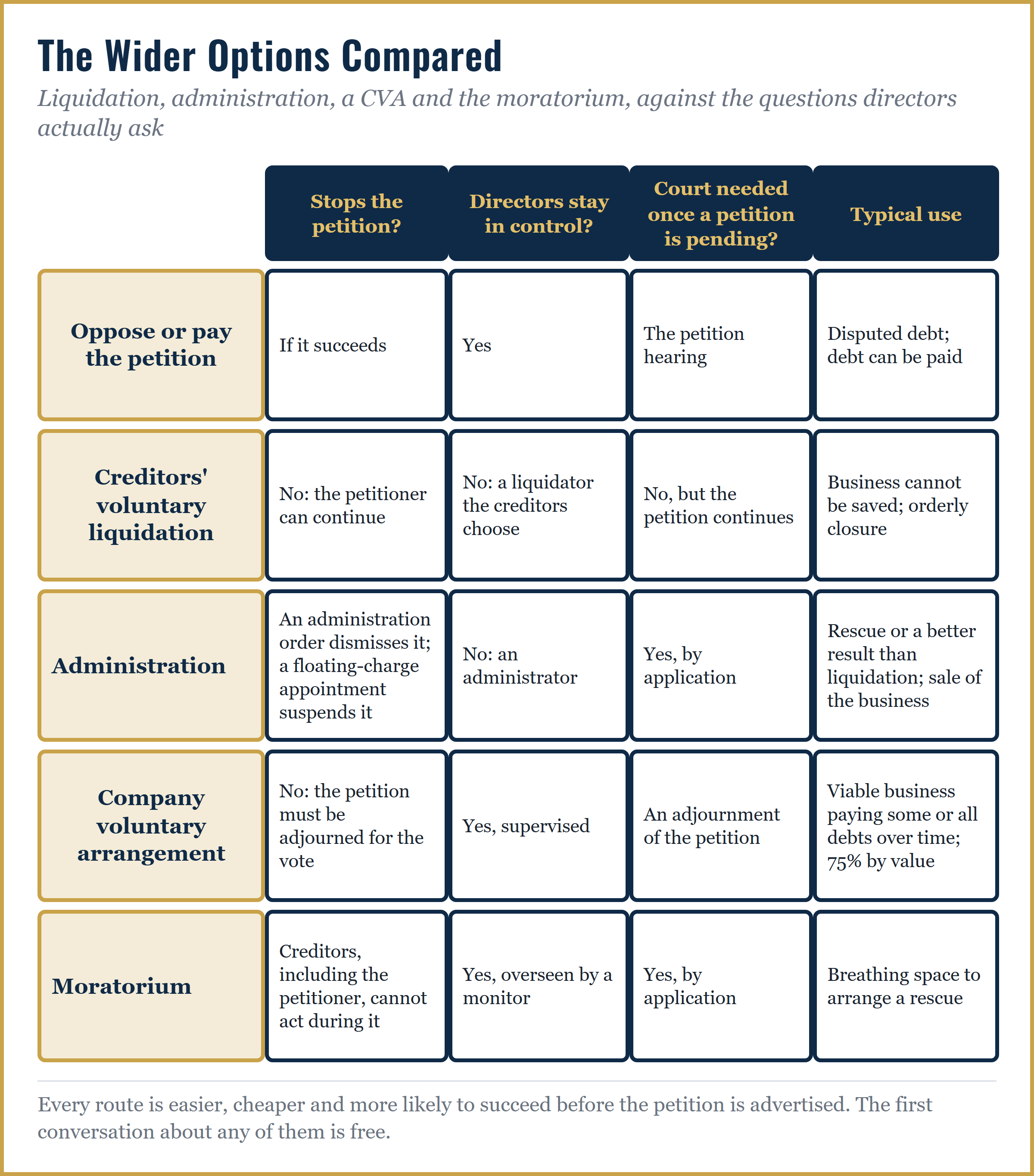 From The Winding-Up Petition Handbook, free for directors.
Key points
- The directors can appoint an administrator by majority decision at a properly convened board meeting.
- A single director in a deadlocked board cannot appoint alone; the articles, the shareholders or a court application may break the deadlock.
- At least five business days' notice must be given to any qualifying floating charge holder before the directors appoint.
- Once a winding-up petition has been presented, administration needs a court order.
- A director who is outvoted should record their objection in writing and take advice; their duties continue.
Frequently asked questions
Do all directors have to agree to administration? No; a majority of the directors, acting at a properly convened board meeting, is enough.
What if my co-director refuses to put the company into administration? If there are only two of you, check the articles for a casting vote, ask the shareholders to resolve to appoint, or consider an application to the court.
Can the shareholders put the company into administration? Yes, the company can appoint an administrator by ordinary resolution of its shareholders, unless a winding-up petition is pending, when a court application is needed.
Can I apply to court for administration on my own? Not as a single director, but you may be able to apply as a creditor if the company owes you money.
Free initial consultation for directors of companies in financial difficulty. Call 07361 999123, text DIRAID to 82228, or request a call back.