
Usually the guarantee goes with the debt. When a lender sells the company's loan, it normally assigns the benefit of your personal guarantee to the buyer as well, and the buyer can then enforce it on the same terms. It cannot make the guarantee bigger, and any defence you had against the original lender generally remains available against the buyer. Directors also ask "is my personal guarantee still valid if the loan was sold?", "do I have to pay a debt purchaser who bought the company's loan?" and "what is a notice of assignment?". This page explains what to check, what the buyer must show, and how the sale can affect the company too.
Letter from a new owner of the company's loan? Free initial consultation with a Solicitor: call 07361 999123 or text DIRAID to 82228.
Your free call is with a Solicitor. Have the petition to hand if you can.
Text DIRAID to 82228and we will call you back
Or call us on 07361 999123
First consultation free · No obligation · Nothing to lose
How a loan and its guarantee are sold
Banks and other lenders regularly sell business loans, singly or in portfolios, to other lenders, funds and debt purchasers, particularly once a loan is in default. The sale is usually made by an assignment: a written transfer of the lender's rights under the loan agreement and its security, including guarantees.
The guarantee itself is unchanged. The same document, with the same limit, conditions and wording, now benefits a different creditor. You did not need to agree to the sale unless the guarantee says so; most guarantees expressly allow the lender to assign.
The notice of assignment
For the buyer to sue in its own name it normally needs a legal assignment: absolute, in writing signed by the seller, with written notice given to the person who owes the money. That is why a "notice of assignment" usually arrives, often as a joint letter from the old lender and the new owner. Until notice is given:
- payments you make to the original lender are good payments;
- the buyer may need to bring the original lender into any court claim.
If you receive a demand from a company you have never heard of, ask it, in writing, for a copy of the notice of assignment and evidence that it owns the debt and the guarantee. Where a debt has been sold more than once, each link in the chain matters.
What the buyer cannot do
- Claim more than the guarantee allows. A cap in the guarantee stays in place, and so do any conditions, such as a written demand before liability arises.
- Add charges. Interest and costs are recoverable only so far as the loan agreement and the guarantee provide for them.
- Ignore your defences. An assignee takes the debt "subject to equities". A defence or right of set-off you or the company had against the original lender, arising before notice of the assignment, can generally be raised against the buyer. Many guarantees contain clauses that limit the defences a guarantor can raise, so the wording needs checking.
The price the buyer paid does not reduce what you owe. A buyer that bought the debt at a discount may, however, be more open to a negotiated settlement.
What to check, in order
- The guarantee. Get a copy of the signed document. Check the limit, whether it is a deed, what triggers liability, and the clause about notices.
- The demand. Many guarantees make you liable only once a written demand has been served in a particular way. Check who made it and when.
- The assignment. Ask for the notice and evidence of title.
- The figures. Ask for a statement of account from both the original lender and the buyer. You can also make a subject access request for the personal data each holds about you.
- Time limits. Claims on guarantees are subject to limitation periods, usually six years for a simple contract and twelve for a deed. When time starts depends on the wording; under many guarantees it runs from the demand.
- Complaints routes. In some cases a personal guarantor of a small business's loan can complain to the Financial Ombudsman Service about how a lender has treated them. Whether that applies to a particular buyer depends on its regulatory position; check before the time limits for complaining run out.
DO NOT ignore letters from a debt purchaser, and DO NOT sign an acknowledgment of the debt or agree a payment plan before you have checked the guarantee and the figures. An admission can make the claim harder to resist and can affect time limits.
The company's side of the debt
The buyer also owns the claim against the company. If the company is still trading and owes more than £750 that it does not dispute, the buyer can present a winding-up petition against it, just as the original lender could, and some buyers do. If a petition arrives, the steps are in served with a winding-up petition: what to do and how to stop a winding-up petition. The difference between a demand and a petition is explained in statutory demand or winding-up petition?
If the company is already in liquidation or administration, the buyer proves in it for the company's debt and pursues you on the guarantee for the balance. If you pay under the guarantee, you can usually claim what you paid from the company, as an unsecured creditor.
DO NOT use the company's money to pay off the guaranteed debt to protect yourself while other creditors go unpaid. A liquidator can recover a payment that prefers a creditor, and it is a common ground for disqualification. See what happens to my personal guarantee after a winding-up petition?
What it means for you personally
A debt purchaser enforcing a guarantee is pursuing you, not the company. It can bring a court claim against you, and an unpaid guarantee debt can lead to a statutory demand against you personally; see statutory demand against a director on a personal guarantee. Early advice usually widens the options: a challenge to the guarantee or the figures, a negotiated settlement, or time to pay. See defending a personal guarantee claim and the wider picture in does limited liability protect directors completely?
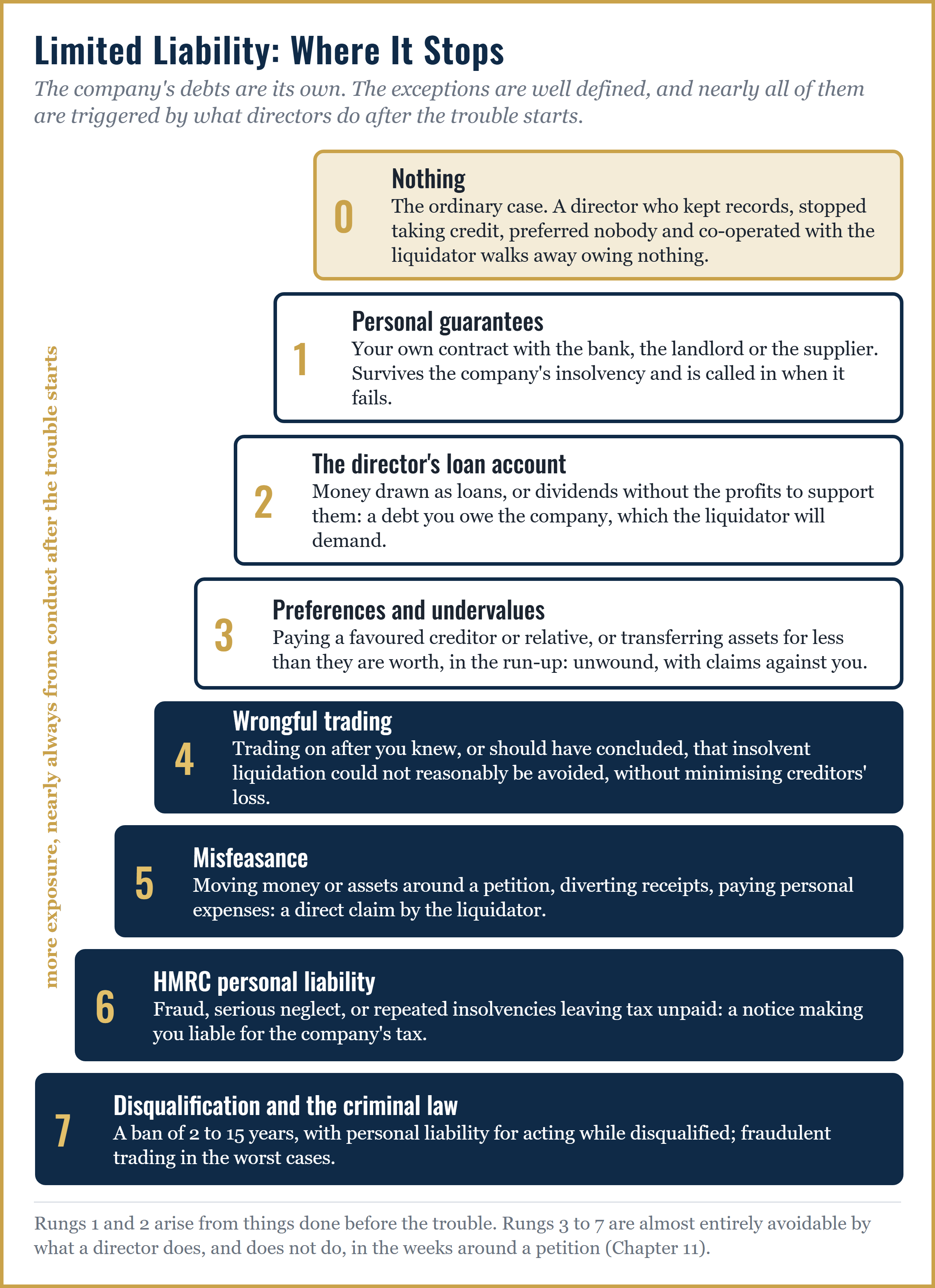 From The Winding-Up Petition Handbook, free for directors.
Key points
- When a lender sells the company's loan, the benefit of your personal guarantee usually passes to the buyer.
- The guarantee's limit, conditions and wording do not change, and defences you had against the original lender generally survive.
- Ask the buyer for the notice of assignment, evidence of title and a statement of account before paying or admitting anything.
- Limitation periods apply, usually six years, or twelve if the guarantee is a deed, often from the date of demand.
- The buyer can also petition to wind up the company for an undisputed debt of more than £750.
Frequently asked questions
Is my personal guarantee still valid if the loan was sold? Usually yes. The benefit of the guarantee is normally assigned with the loan, and the buyer can enforce it on the same terms as the original lender.
Do I have to pay a debt purchaser who bought the company's loan? If it has a valid assignment, has given notice and the guarantee has been triggered, yes, up to the guarantee's limit; check each of those points first.
What is a notice of assignment? A written notice telling you that the lender has transferred the debt, and its rights against you, to a new owner, and that payments should now go to that owner.
Can a debt buyer wind up my company? Yes, if the company owes it more than £750 that is not genuinely disputed, it can present a winding-up petition just as the original lender could.
Free initial consultation for directors of companies in financial difficulty. Call 07361 999123, text DIRAID to 82228, or request a call back.