
Whether paying ends the petition, substitution and supporting creditors, paying safely after presentation with third-party funds, instalments, HMRC petitions and costs. This is Chapter 8 of The Winding-Up Petition Handbook, the free book for directors by Alastair Redfern LL.B., Solicitor, published by Director Aid. Download the whole book free, or read on.
← Previous: Disputed Debts · All chapters · Next: The Hearing →
Does Paying End the Petition?
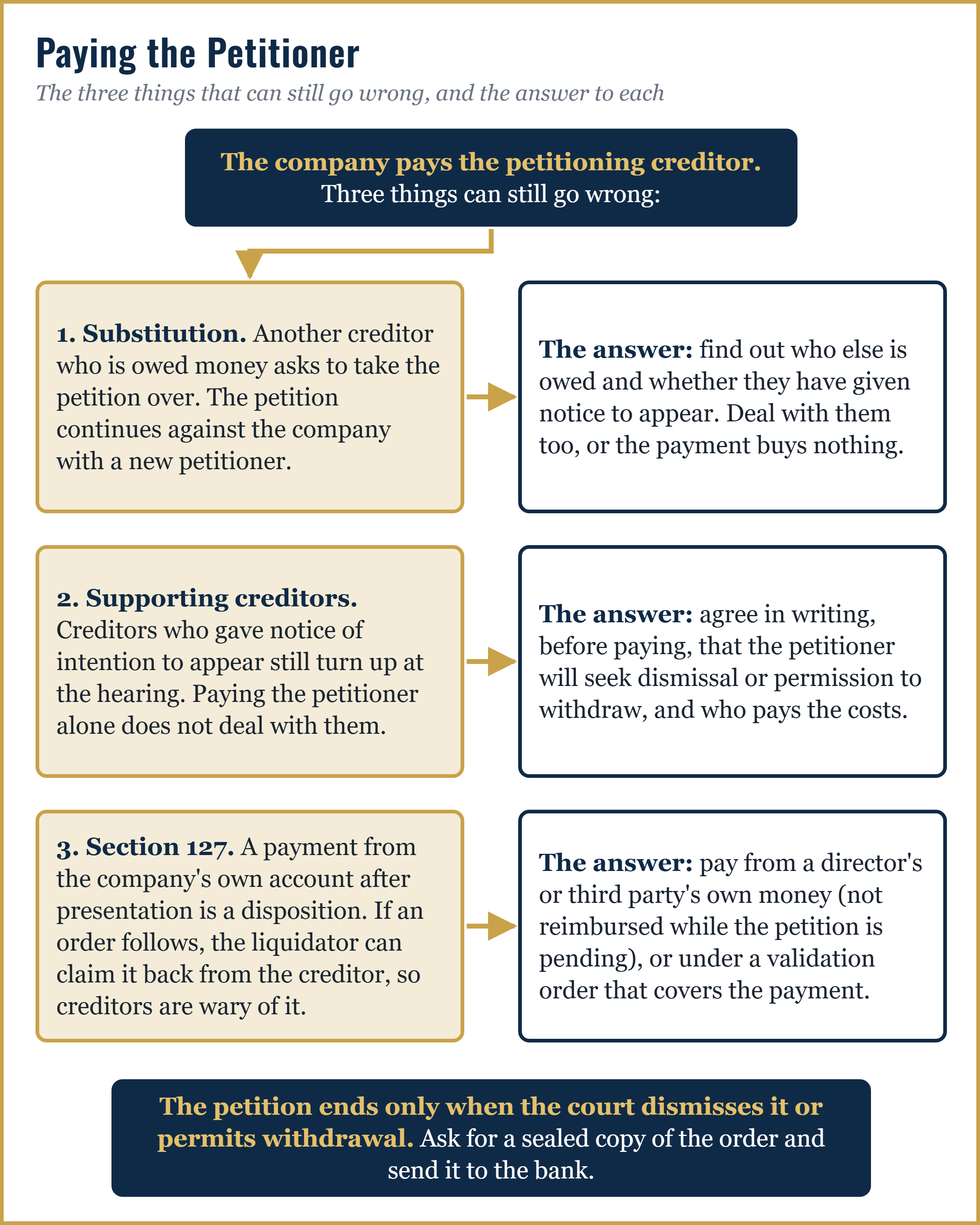
Often, but not automatically. Paying the petitioning creditor, with its costs, usually leads to the petition being dismissed or withdrawn with the court's permission. But three things can go wrong.
- Substitution. If the petitioner is paid, any other creditor who is owed money can ask the court to be substituted as petitioner, and the petition continues against the company.
- Supporting creditors. Other creditors can give notice that they support the petition. Paying the petitioner alone does not deal with them.
- Section 127. A payment from the company's own account after presentation is a disposition of company property. If a winding-up order is later made, the liquidator can seek to recover it from the creditor. Creditors who know this can be cautious about accepting it.
Before Presentation
Paying in full before the petition is presented is the cleanest outcome. If the company receives a statutory demand, or a letter threatening a petition, that is the time to act.
Paying Safely After Presentation
- Check who else is owed. If other creditors are likely to appear, paying the petitioner may not end the petition.
- Consider third-party funds. A payment made by a director or a third party from their own money is not a disposition of the company's property, provided the company does not reimburse them while the petition is pending; reimbursement would itself be a disposition.
- Agree terms in writing, including costs, and including that the petitioner will ask the court to dismiss the petition or will apply for permission to withdraw it.
- Get the order. The petition is not over until the court dismisses it or permits withdrawal. Ask for a sealed copy of the order.
Instalments
Instalments are possible only if the petitioner agrees and the court is willing to adjourn the petition. Adjournments for payment are usually short and rarely repeated, so a plan running over many months is unlikely to be accepted.
HMRC Petitions
HMRC will usually require the petition debt and its costs to be paid in full, will ask about other unpaid liabilities and outstanding returns, and rarely agrees to instalments once a petition has been presented. A Time to Pay arrangement is far easier to obtain before HMRC has gone to court.
Costs
Expect to pay the petitioner's costs of the petition as well as the debt. The amounts are set by the court's scale and by the petitioner's solicitors' reasonable costs. Paying does not remove the Gazette notice: it stays on the record, but the dismissal is recorded as well.
← Previous: Disputed Debts · All chapters · Next: The Hearing →
Citation: Redfern, A., The Winding-Up Petition Handbook: A Director's Guide to Petitions, Deadlines, Frozen Bank Accounts and the Options That Remain, Director Aid, First Edition, October 2026. Chapter 8, Paying the Debt.
Free initial consultation for directors facing a winding-up petition. Call 07361 999123, text DIRAID to 82228, or request a call back.
Your free call is with a Solicitor. Have the petition to hand if you can.
Text DIRAID to 82228and we will call you back
Or call us on 07361 999123
First consultation free · No obligation · Nothing to lose