← Previous: The Hearing · All chapters · Next: The Director's Personal Position →
### What Happens Immediately - The Official Receiver becomes liquidator when the order is made. An insolvency practitioner may later be appointed in their place. - The directors' powers end. The company's assets come under the liquidator's control. - The order is advertised and registered at Companies House. - Employees are usually dismissed and the business stops trading. - Directors must provide a statement of affairs if the Official Receiver requires one, must attend interviews and must co-operate with the Official Receiver. - The directors' conduct is investigated and reported on to the Insolvency Service. ### Rescission An application to rescind a winding-up order must be made within five business days of the order. The court can extend the time but rarely does. The application needs evidence the court did not have at the hearing, usually that the company can in fact pay its debts, or that the creditors, including the petitioner, now support rescission. Paying the petitioner alone is not enough. An appeal is a separate route with its own time limit and its own test. ### Are You Personally at Risk? A company's debts are generally its own, not its directors'. But a winding-up order starts an investigation of the directors' conduct, and there are several ways in which a director can become personally liable or be disqualified. [Chapter 11](https://directoraid.co.uk/handbook-11-the-directors-personal-position.html) deals with them in full. Most of those risks are reduced by exactly the conduct this Handbook recommends: stop non-essential payments, do not prefer one creditor, do not move assets, keep records and take advice early. 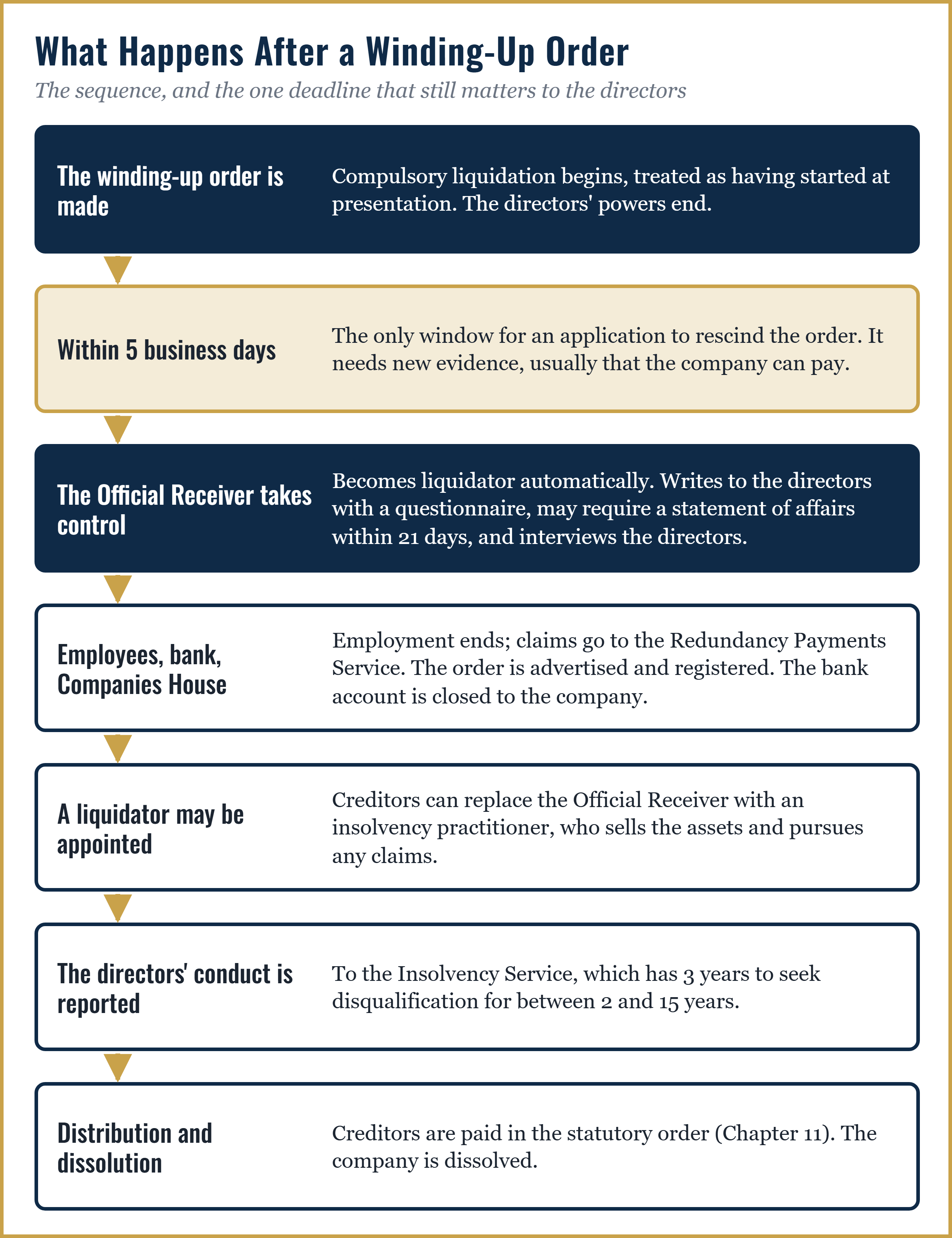← Previous: The Hearing · All chapters · Next: The Director's Personal Position →
**Citation:** Redfern, A., *The Winding-Up Petition Handbook: A Director's Guide to Petitions, Deadlines, Frozen Bank Accounts and the Options That Remain*, Director Aid, First Edition, October 2026. Chapter 10, *If a Winding-Up Order Is Made*. --- Free initial consultation for directors facing a winding-up petition: text DIRAID to 82228, phone 07361 999123, email help@directoraid.co.uk, or book at https://calendly.com/directoraid/consultation.